Saturday, September 12, 2026Daily Edition · No. 001

The Other Headlines

There is more good in the world than the headlines suggest.

Bad news travels fast. Help good news travel faster.

The Other Headlines / Collection

Clean Energy & Innovation

More stories. Bigger possibilities.

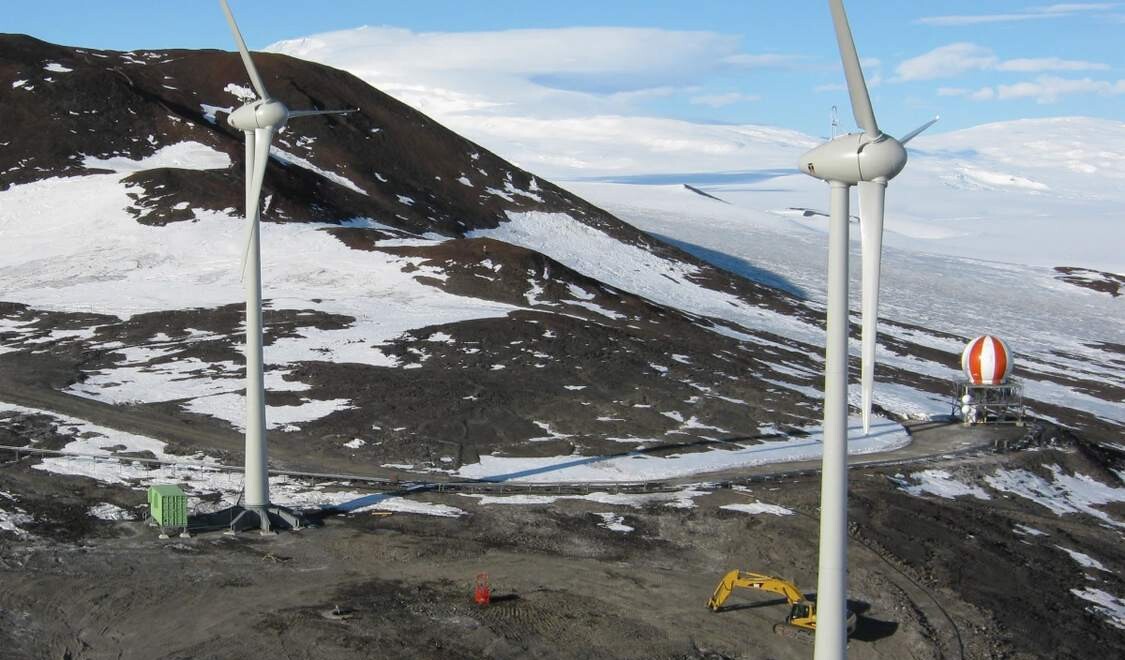
Thematic illustration for this collection, not an image of any listed story
Thematic photo: Partonez · CC BY-SA 4.0. Not a photograph of a listed story.
29 published stories
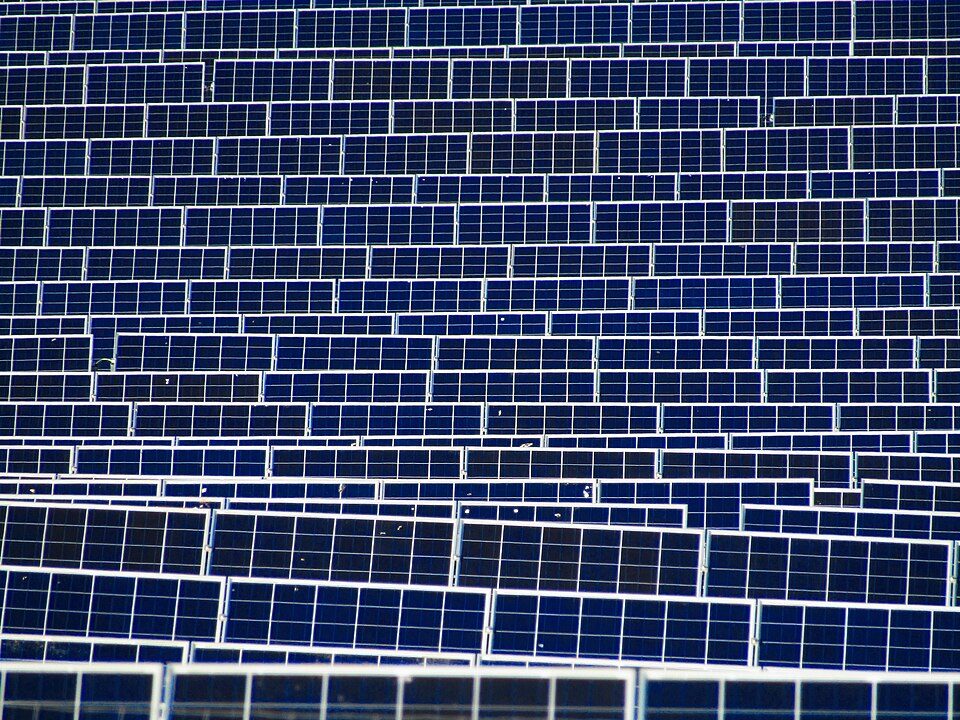
Publisher photograph accompanying Good News Network's report

2026-10-24 / Science & Technology

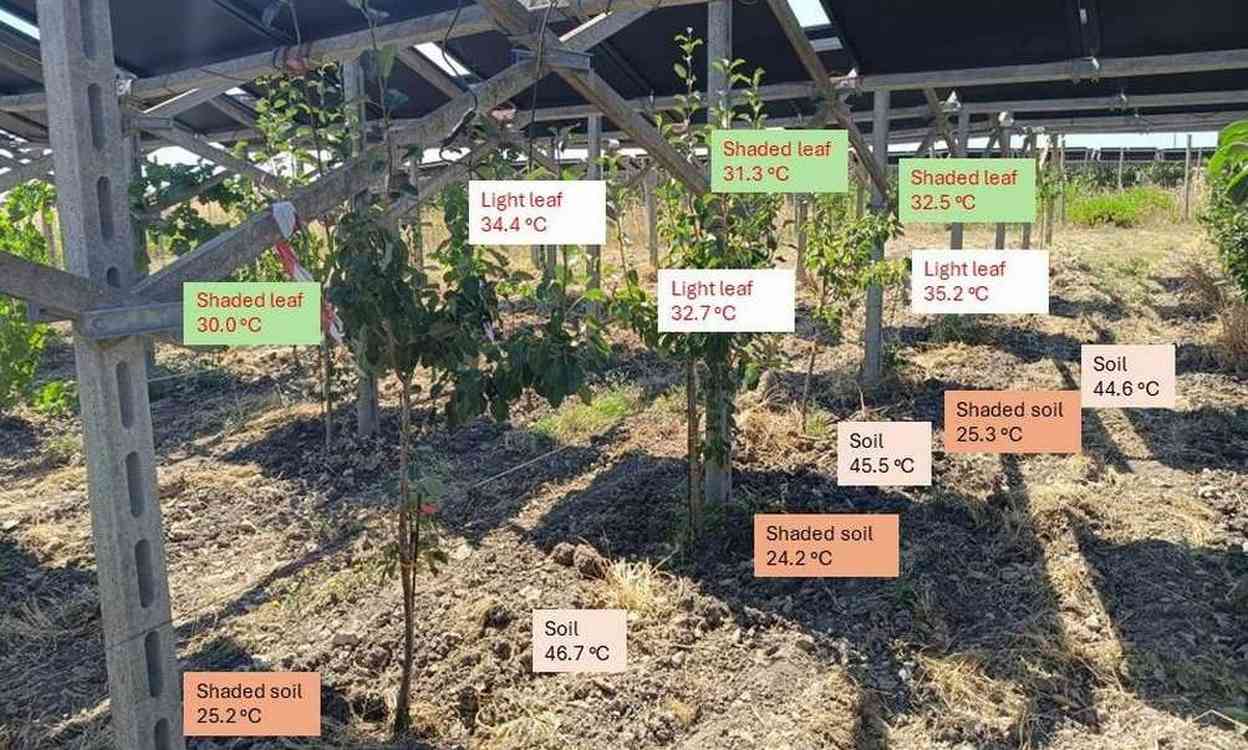
Clean Power and Bigger Harvests Can Share the Same Land: Grapes Under Solar Panels Grew Heavier Bunches in Puglia

A University of Bari study in southern Italy found that grapevines partially shaded by electricity-generating solar panels produced bunches almost three times as heavy as those grown in full sun. The results suggest that vineyards in suitable hot, dry conditions could combine clean energy with stronger crop production, though not every grape variety or region would benefit.

2026-09-27 / Science & Technology

What if the World’s Smartest Technology Spoke Your Mother Tongue? Indian Farmers Are Using Voice AI to Diagnose and Save Sick Cattle

Rural livestock owners in India are tapping into artificial intelligence platforms that answer spoken veterinary questions directly in regional languages like Gujarati. In villages where veterinary care is scarce and delays can cost a family its livelihood, women farmers are diagnosing complex animal illnesses in minutes simply by describing symptoms into their phones. The deployment demonstrates how conversational computing can bridge literacy and geographic barriers to protect vital rural household incomes.

2026-09-24 / Energy

The Oil Shock Has a Detour: Saudi Arabia Restarted the 1,200-km Pipeline That Moves Crude Around Hormuz

Saudi Arabia has restarted flows through its East-West crude pipeline, halted earlier this month after a drone attack, restoring part of the kingdom's ability to export oil without using the Strait of Hormuz. The 1,200-km line runs to Yanbu on the Red Sea; before the shutdown it moved about 4 million barrels per day, roughly 4% of global supply. It is restarting at a reduced rate.

2026-09-23 / Energy & Climate

The Fuel Shock Everyone Is Paying For Has an Opposite: Sun and Wind Ran 80 Percent of Australia's Grid, and Household Rooftops Supplied Half of It

On 18 September renewables supplied 79.5% of demand on Australia's National Electricity Market, beating the previous record of 78.6%. The next day the Australian Energy Market Operator recorded 80.4%, with household rooftop solar alone meeting more than half of all demand for around 30 minutes at lunchtime. At the moment the first record was set, 26,316MW of renewable power was on the grid against just over 2,000MW from fossil fuels.

2026-09-18 / Science & Technology

Three Students Built a Cheap Headset to Spot Concussions in Young Athletes Right on the Sideline

A team of Harvard University students has developed a low-cost, eye-tracking headset capable of screening young athletes for concussions in two to three minutes. Designed to be affordable for school sports programs, the portable device detects subtle ocular trauma indicators immediately after a head collision. Their invention, which earned the prestigious James Dyson Award, could prevent undetected brain injuries from going untreated during critical game moments.

2026-09-16 / Science & Technology

In Extreme Heat, One Block Can Swelter While Another Stays Cool. Now Relief Can Reach the Streets Where People Need It Most.

Urban heat islands can make certain city blocks significantly hotter and more dangerous than neighboring streets, putting vulnerable residents at severe risk during extreme heatwaves. Atmospheric scientists at NSF NCAR have developed high-resolution modeling that pinpoints heat stress at the neighborhood scale, giving municipal leaders the clarity they need to deploy cooling centers, hydration, and medical care straight to the blocks facing the greatest danger.

2026-09-13 / Science & Technology

Seventy-One Nations Agree: What We Discover on the Moon Will Belong to All of Humanity

Under an initiative reinforced through the Artemis Accords, 71 countries have formally pledged to share all lunar samples, scientific data, and findings openly with researchers across the globe. The pact establishes open science and international cooperation as the baseline for humanity's return to the Moon, rather than national secrecy. It ensures that the knowledge gained beyond our atmosphere serves the collective progress of people on Earth.

2026-09-13 / Science & Technology

We Have Studied Its Bones for a Century. Now We Finally Have the Footsteps of an Adult T. Rex

Paleontologists in North Dakota have uncovered a 23-foot sequence of four fossilized footprints, marking the first confirmed trackway left by a walking adult Tyrannosaurus rex. Preserved in stone for 66.5 million years, the prints allow scientists to calculate how the massive predator balanced and propelled its enormous weight. The rare discovery transforms static museum skeletons into a living, breathing animal captured mid-stride.

2026-09-11 / Science & Technology

Inside Our Cells Were Crucial Proteins Science Couldn't See. We Are Finally Learning What They Do.

By combining artificial intelligence with bench biochemistry, researchers have mapped previously undetected human proteins and illuminated their exact duties inside living cells. Uncovering this invisible cellular machinery offers medicine fresh, high-precision targets to treat stubborn diseases. While turning these insights into clinical treatments will require years of lab work, the discovery fundamentally deepens our understanding of human biology.

2026-09-11 / Science & Technology

The Ancient Ancestors of Rice and Wheat Survived Catastrophic Climates. Their Secrets Could Protect Our Food Supply.

A high-resolution genome analysis has uncovered how the prehistoric ancestors of modern cereals adapted to endure dramatic environmental turbulence millions of years ago. Agronomists can now translate these evolutionary survival mechanisms into practical blueprints for breeding drought- and heat-resistant crops. While field trials will take seasons to reach commercial scale, unlocking this deep genetic history strengthens agriculture against volatile weather.

2026-09-11 / Science & Technology

Replacing Electricity With Light Inside Microchips Could Slash Computing Power. A Decades-Old Roadblock Just Fell.

Engineers at Tohoku University and Kyocera have engineered a precise laser treatment that bonds optical components directly onto silicon chips without thermal damage. Transmitting data via photons rather than electrical current drastically reduces the energy and heat generated by intensive digital computing. Although high-volume commercial production remains ahead, solving this physical manufacturing barrier moves light-based computing from theory toward reality.

2026-09-10 / Science & Technology

Braving Blistering Heat and Relentless Gravity, Humanity Has Successfully Reached Mercury for Only the Third Time

The European Space Agency's BepiColombo probe has safely arrived at Mercury, marking only the third time in human history that a spacecraft has reached our solar system's innermost planet. Surviving extreme temperatures and intense gravitational forces, the mission now begins gathering data on how rocky worlds form. The triumph reflects decades of international engineering and patient scientific cooperation pushing the frontiers of exploration.

2026-09-09 / Science & Technology

For the First Time, a Commercial Rocket Has Reached Orbit Directly From European Soil

Munich startup Isar Aerospace has completed the first successful commercial orbital flight from mainland Europe, marking a breakthrough for the continent's independent space capabilities. The launch demonstrates that homegrown European enterprises can place climate-monitoring, research, and communication satellites into orbit without depending on overseas launch providers. The milestone clears the path for regular European commercial launches in the years ahead.

2026-09-08 / Science & Technology

The Molecules of Life Never Stand Still: AI Can Now Map How Proteins Bend and Shift in Real Time

Scientists in Japan have expanded artificial intelligence beyond static biological predictions, enabling tools like AlphaFold3 to model the dynamic shape-shifting movements that proteins undergo inside living organisms. Cellular machinery operates by bending and flexing, but computational models had previously been restricted to frozen snapshots, obscuring key moments where therapies could intervene. The computational breakthrough gives medical researchers a dynamic lens into cellular mechanics, accelerating the design of treatments for conditions once considered undruggable.

2026-09-08 / Science & Technology

When Hardware Breaks, Computers Usually Crash. A New Brain-Inspired Chip Keeps Running Through Severe Damage.

Engineers at the University of Hong Kong and Hewlett Packard Labs have developed an associative memristor chip that successfully retrieves complete memories from incomplete cues and continues operating even when large portions of its hardware are destroyed. Conventional computer chips suffer catastrophic failures when individual circuits fracture, but this new architecture mimics the human brain's distributed, damage-tolerant resilience. The breakthrough paves the way for dependable electronics capable of functioning autonomously in harsh environments, from deep space exploration to critical infrastructure.

2026-09-08 / Science & Technology

Holding Millions of Suns’ Worth of Matter but Not a Single Star: Vast Invisible Clouds Discovered in Deep Space

Astronomers operating China's FAST radio telescope have discovered two gigantic clouds of primordial hydrogen gas drifting near the Whirlpool galaxy, each containing roughly three million times the mass of our sun while remaining completely starless. Because these vast reservoirs omit optical starlight, they had remained undetected until picked up by sensitive radio frequencies. The observation provides astrophysicists with a rare window into the quiet, invisible gas reserves that fuel galactic evolution across cosmic time.